Insomnia Cookies
- 4.8
- Rating
- 500.00K
- Installs
- Free
- Price

 Analysis by App-foxy
I installed Insomnia Cookies expecting a straightforward way to order something sweet, and that is exactly where this Food & Drink app makes the most sense. It is built for the moment when opening a browser, searching for a nearby cookie shop, and comparing menus feels like unnecessary work. I can go directly to the ordering experience, look through the available treats, and decide whether delivery or pickup fits the situation.
The app is free, made by Insomnia Cookies LLC, and available to an Everyone audience. Its average rating sits at 4.8 from around 11 thousand ratings, with roughly 1.8 thousand written reviews, while the Android listing shows over 100 thousand installs. Those figures suggest that it has become a familiar ordering tool for people who already know the brand, although popularity alone does not make it the right choice for every dessert order.
My overall impression is positive but specific: this is not a general restaurant marketplace, a recipe app, or a place to compare every bakery in town. It is a focused shortcut for Insomnia Cookies orders. That narrow purpose is also its biggest strength and its main limitation.
You May Also Like

 Blood Strike: 2.5 Anniversary
Blood Strike’s Loadouts Turn Every Drop Into a Tactical Gamble
A close look at Blood Strike’s custom loadouts: how fast access to signature weapons reshapes its battle royale rhythm, rewards preparation, and narrows the gap between fights.

 Pandora - Music & Podcasts
Pandora’s Music Is Easy to Start, but Harder to Recover
Pandora’s strength is its low-effort path from a seed to a station. Its weak spot is how much confidence it asks you to place in connection, setup, and quiet recovery.

 8 Ball Pool
 Is Built on Rivalries, Rematches, and Routine
A close look at the rivalries, rematches, shared routines, and unanswered safety questions that turn a quick pool match into a persistent mobile community.

 Samsung Music
’s Quiet Strength Is Playing What You Already Own
Its reach comes less from spectacle than from dependable access to a personal library. That simplicity is both the app’s strongest retention engine and its ceiling.

 AccuWeather: Weather Radar
AccuWeather Review: A Quick, Clear Forecast for Everyday Decisions
For everyday plans, the best forecast is the one you can understand quickly. AccuWeather makes rain timing, radar, and local conditions easy to act on, with a few trade-offs.

 Hill Climb Racing
Why Hill Climb Racing Still Turns Crashes Into One More Run
A tiny car, a bumpy hill and one more upgrade: Hill Climb Racing keeps resurfacing because its simple chaos makes every near-miss feel personal.
More From Our News Desk
View All News


How the app feels in everyday use
The best way to understand the app is to imagine a late evening when I want cookies without turning the request into a full meal-ordering project. Instead of opening a broad delivery service and sorting through restaurants, I can start with the Insomnia Cookies menu and concentrate on the items that brought me there in the first place. That direct route feels more natural when the craving is specific.
The experience also suits planned occasions. If I am arranging a small study session, sending a sweet surprise, or picking up dessert after dinner, a dedicated ordering app keeps the decision focused. I do not have to browse unrelated food categories. The app’s purpose is clear from the first interaction: choose Insomnia Cookies, decide how to receive the order, and complete the purchase through the brand’s own channel.
That focus matters more than it sounds. General delivery apps are convenient when I want to compare restaurants, but they can add visual clutter when I already know what I want. A dedicated app can be quicker for repeat customers because the destination is settled before the order begins. In my experience, that makes the service feel less like searching and more like returning to a familiar counter.
At the same time, the app cannot solve the basic limitation of a single-brand catalog. If I want coffee from one place, a savory snack from another, or a wider range of dietary choices, I would rather use a broader delivery service or order directly from a restaurant with a more varied menu. Insomnia Cookies is strongest when cookies are the main event, not when I am building a complete meal.
A practical order scenario
Picture a group project running late. One person wants a small treat, another wants something to share, and nobody wants to leave the room. I would use the app to check the available selection, choose whether delivery or pickup is more sensible, and place one focused order instead of asking everyone to search separately. The useful part is not just convenience; it is reducing the number of decisions in a tired moment.
For a situation like that, I would make the menu decision before promising an exact combination to the group. Availability can influence what makes sense, and dessert orders are often more flexible than meal orders. I would also check the final order carefully before submitting it, especially if several people have requested different items. A dedicated cookie app makes ordering simpler, but it does not remove the need to review the basket.
For gifting, I would treat the app as a practical ordering route rather than a full gift-planning service. The recipient, delivery details, and timing deserve extra attention because a cookie order is only useful if it reaches the right person at a sensible moment. The app is helpful for placing the order, but I would still handle the social details myself rather than assuming the software will organize the occasion.
What the current version tells me
The current Android version is 9.1.0, and the app has been available since July 11, 2014. That long presence gives the product a more established feel than a newly launched ordering tool. It also suggests an evolution from a simple mobile storefront toward a maintained ordering channel, although I would judge each update by how much it improves the actual order rather than by the version number alone.
For someone using an older Android phone, the listed minimum operating system is Android 5.0. That broad compatibility is useful for people who keep a phone for several years, but compatibility should not be confused with identical performance on every device. A newer phone will generally provide a smoother experience when menus, account steps, and checkout screens are involved.
The release history is relevant mainly because ordering apps need to remain dependable. A cookie menu can be simple, but the surrounding process still has to handle location, fulfillment choices, and payment steps without making the user wonder whether the order went through. The mature age of the product makes me expect a familiar workflow, while the current version is the one I would use to judge its present-day polish.
Changes and the effect on returning customers
When an app reaches a version such as 9.1.0, existing users usually care less about the label and more about whether familiar actions remain easy. Returning customers want to find the menu quickly, repeat an order without confusion, and understand the status of the current purchase. I would welcome improvements that reduce taps or clarify checkout, but I would not want visual changes that make a simple cookie order feel like a complicated shopping task.
The app’s evolution also raises a useful distinction between new capability and better presentation. A refreshed interface may make the same ordering process easier to understand, while a functional change could alter how I choose delivery, pickup, or items. As a user, I would pay attention to both: a polished screen is welcome, but reliability at the final step matters more than decoration.
For existing users, the safest approach is to update before an important order rather than waiting until a group event is already underway. This is not because I expect a problem every time; it is simply good practice for any ordering app. I would rather open the current build, confirm that I am signed in if needed, and review the available options before promising cookies to other people.
New users may notice the opposite trade-off. A mature app can feel reassuring because the concept is already established, but it may also carry more steps than someone expects from a quick dessert purchase. If the first order feels slower than browsing a local shop’s mobile page, that does not necessarily make the app poor; it reflects the extra work involved in creating a complete order rather than merely viewing a menu.
Where it beats the usual alternatives
Compared with calling a store, the app gives me a more private and deliberate way to build an order. I can review choices at my own pace instead of trying to remember the menu while speaking. That is especially useful when ordering for several people, because I can check the basket before committing.
Compared with a general delivery marketplace, the dedicated app offers a more concentrated experience. I would choose it when I already want Insomnia Cookies and do not need to compare unrelated restaurants. A marketplace is better when I want to combine items from different businesses, search across brands, or use one familiar service for an entire meal.
Compared with a mobile browser, the app’s advantage depends on how often I order. For a one-time purchase, a browser may be enough. For repeat customers, keeping a dedicated app available can make the brand easier to reach and reduce the temptation to wander through unrelated results. I see the app as most valuable for habit and speed, not because a browser cannot place an order.
There is also a social advantage to a brand-specific route. If a group has already agreed on Insomnia Cookies, sending everyone to the same ordering destination avoids mismatched menus and different service fees from separate platforms. I would still compare the final total and fulfillment choice, but starting in one place makes coordination easier.
Small habits that make ordering smoother
My first tip is to decide whether the order is for immediate enjoyment or for a planned time before opening the menu. That choice affects how I think about pickup versus delivery and prevents me from filling the basket before considering the practical side. For an individual craving, speed may matter most; for a gathering, clarity and timing matter more.
My second tip is to treat the basket as a communication tool when ordering for others. I would group the selections mentally by person, then review the complete order once more before payment. This avoids the common mistake of remembering the headline item while overlooking a small request from someone else.
My third tip is to use the dedicated app when the brand decision is already made, not as a discovery tool for every possible dessert. If I am undecided between cookies, ice cream, pastries, and a full meal, I would start with a broader service. Once I know that Insomnia Cookies is what I want, the app becomes much more efficient.
A fourth useful habit is to separate menu confidence from delivery confidence. I might know exactly which cookies I want while still needing to think about whether delivery or pickup is realistic for the occasion. Making those decisions independently leads to fewer rushed choices, particularly when I am ordering for a group or sending something to another person.
What still feels limited
The narrow catalog is the clearest limitation. A focused cookie app cannot replace a general food-ordering service, and I would not install it expecting restaurant discovery or a complete meal solution. Its value depends on wanting this particular brand. If that desire is occasional, the app may feel less essential than a browser or a marketplace already used for other orders.
There is also a psychological trade-off in using a dedicated brand app: convenience can make impulse ordering easier. The direct path from craving to checkout is useful, but I would still pause to consider quantity, timing, and whether delivery is worth it for the situation. The app helps me order; it does not make the decision for me.
Group ordering can remain more complicated than individual ordering, even when the app is well designed. One person may be collecting requests, another may be paying, and a third may be receiving the delivery. I would not assume that a single app can coordinate all those roles automatically. For larger events, a shared message or simple list alongside the app may still be the most reliable workflow.
People with strict dietary needs should also make their decision carefully. I would inspect the current menu and item information rather than assuming that a dedicated cookie service automatically covers every requirement. If avoiding certain ingredients is essential, a shop with clearly documented options may be a better fit, depending on the available selection and the individual’s needs.
Finally, a dedicated ordering channel is only as convenient as its local fulfillment options. If pickup is easier than delivery in my situation, I would choose based on practicality rather than loyalty to one ordering method. The app can present the route, but distance, timing, and the occasion still determine whether the order feels worthwhile.
Who should use it, and who should skip it
I would recommend the app to regular Insomnia Cookies customers, students or workers who often order late treats, and anyone who wants a direct way to arrange a cookie pickup or delivery. It is also a sensible choice for people who frequently place small group orders and prefer reviewing everything in one dedicated basket.
I would be less enthusiastic for someone who rarely eats cookies, wants to compare many bakeries, or prefers combining dessert with a broader restaurant order. In those cases, a general delivery platform or a local bakery’s own service may provide more useful choice. The app is not failing when it does not offer those things; they simply fall outside its focused purpose.
It may also be the wrong first choice for someone who dislikes installing separate apps for individual brands. If the order is a one-off and the browser experience is already convenient, downloading another app may not save meaningful time. The strongest case appears when the same brand is likely to be used again.
What I would watch in future updates
For future versions, I would pay attention to whether the app keeps the ordering path short while making important details clearer. The ideal update would help me understand the basket, fulfillment choice, and final confirmation without turning the experience into a maze. Speed matters, but confidence matters just as much when money and delivery details are involved.
I would also watch how well the app serves repeat customers. A returning user should feel that the second order is easier than the first, not that every visit starts from zero. Clear access to familiar choices and a dependable checkout flow would make the app more valuable over time than a purely cosmetic redesign.
Another area worth watching is how the product balances impulse convenience with responsible clarity. I like the direct route to cookies, but useful ordering tools should make quantity, timing, and fulfillment easy to understand before the final decision. Small improvements in those moments can prevent avoidable mistakes without adding friction to a simple order.
The current version gives me enough confidence to view the app as a practical brand-specific ordering option rather than a novelty. Its established history, free availability, and focused purpose make it easy to understand. I would simply keep my expectations aligned: this is a shortcut to Insomnia Cookies, not a universal food marketplace.
My final recommendation is straightforward. If I already want Insomnia Cookies and expect to order more than once, I would use the app and keep it available for quick repeat visits. If I am still deciding what kind of food I want, or if I need several businesses in one order, I would choose a broader alternative. Its real strength is turning a specific cookie craving into a focused order with fewer distractions.
FAQs for Insomnia Cookies
01What is Insomnia Cookies and what services does it offer?
Insomnia Cookies is a mobile app that allows users to order freshly baked cookies and other sweet treats for delivery or pickup. The app provides a variety of cookie flavors, brownies, and ice cream options. Users can place orders late into the night, making it perfect for satisfying late-night cravings.
02How can I place an order using the Insomnia Cookies app?
To place an order with the Insomnia Cookies app, simply download the app on your Android or iOS device, create an account, and browse the menu. Select the items you wish to purchase, specify any preferences, and proceed to checkout. You can choose between delivery or pickup at your nearest store.
03Does Insomnia Cookies offer any special deals or discounts?
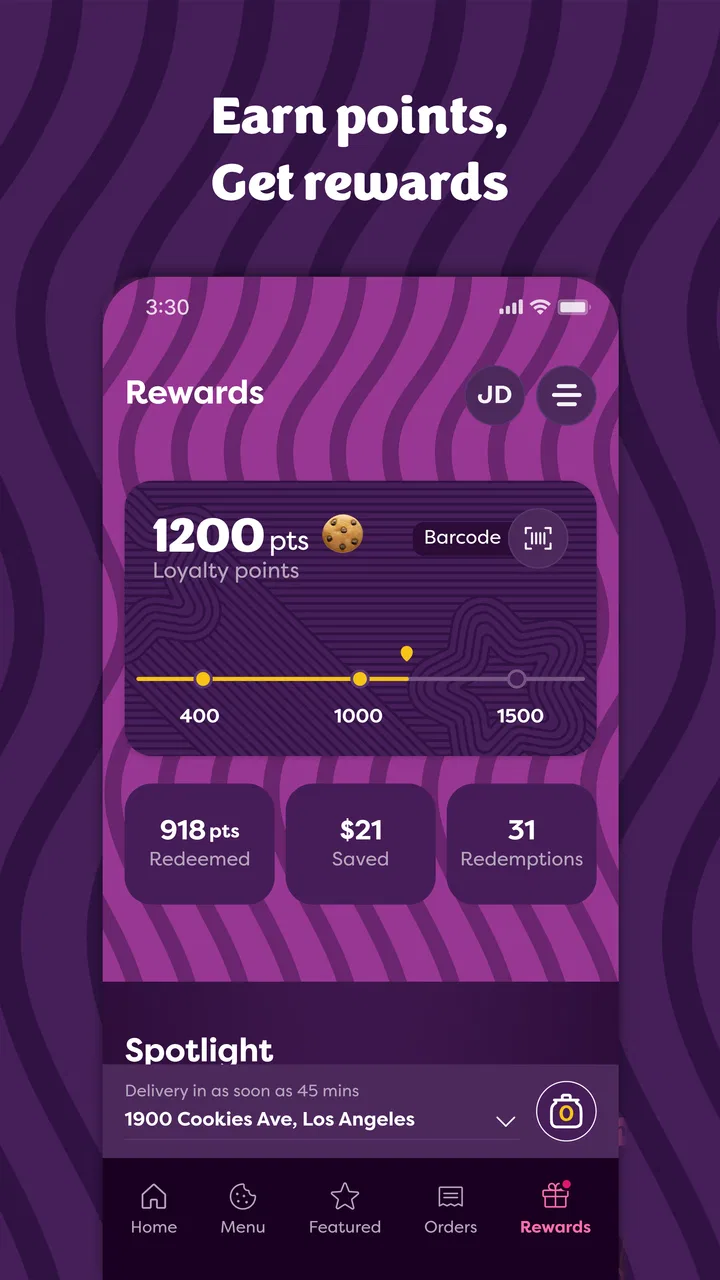
Yes, Insomnia Cookies frequently offers special deals and promotions through their app. Users can access exclusive discounts, such as free delivery days or discounts on bulk orders. Be sure to enable notifications to stay updated on the latest offers and take advantage of the loyalty program for additional rewards.
04What are the delivery hours for Insomnia Cookies?
Insomnia Cookies is known for its late-night delivery service, typically available until 3 a.m. in most locations. However, delivery hours may vary based on the store location and day of the week. It's advisable to check the app for the specific operating hours of your local store.
05Is there a minimum order requirement for delivery through Insomnia Cookies?
Yes, Insomnia Cookies usually has a minimum order requirement for delivery, which can vary depending on your location. This ensures that delivery costs are covered. The app will inform you of the minimum order amount during the checkout process, so you can adjust your order accordingly.
Pros
- Wide variety of delicious cookies.
- Late-night delivery available.
- User-friendly app interface.
- Frequent promotions and discounts.
- Loyalty program for regular customers.
Cons
- Limited delivery areas.
- No gluten-free options.
- Occasional app crashes.
- High delivery fees.
- Limited customization options.

Insomnia Cookies
Gallery